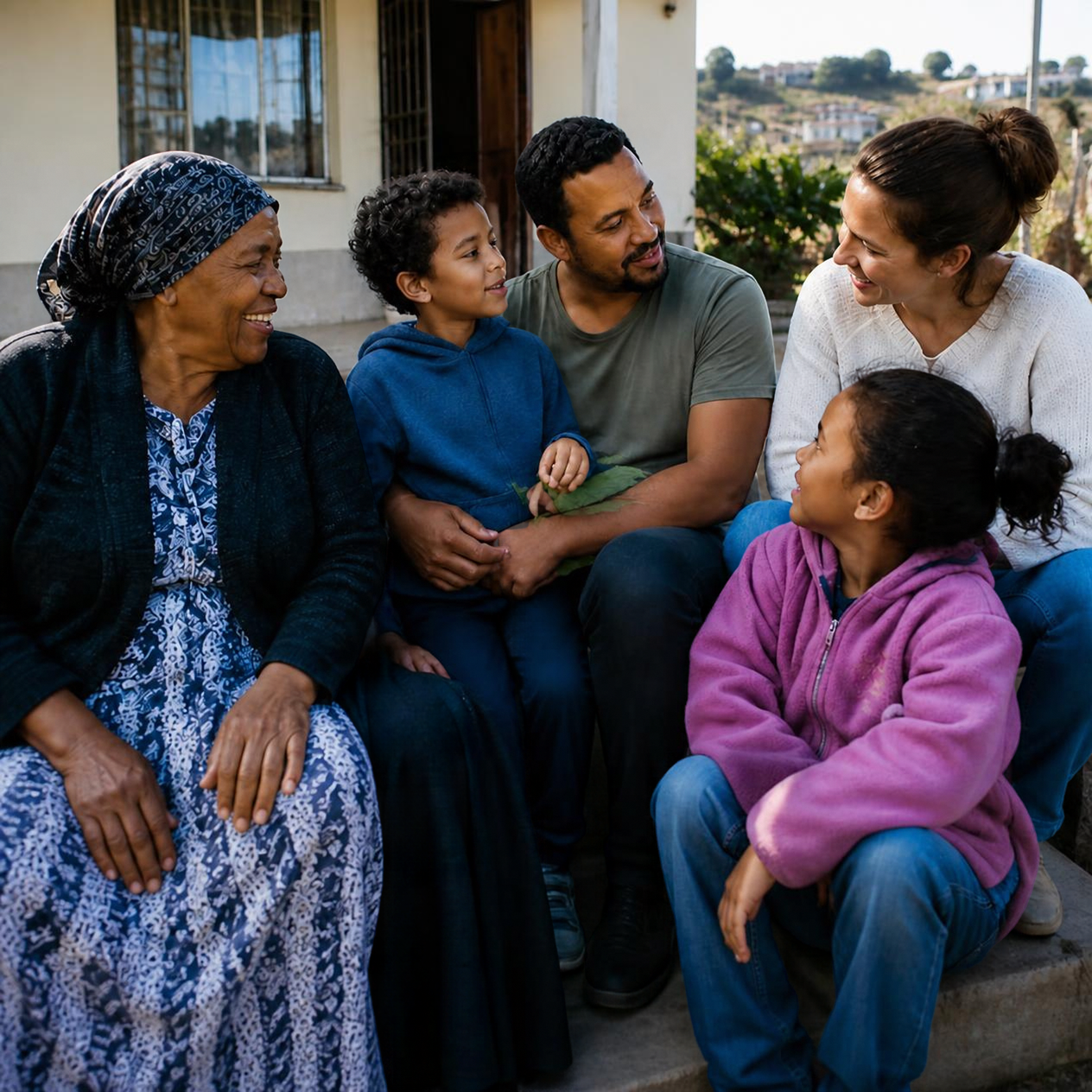
South Africa’s family picture has changed dramatically, and the numbers are impossible to ignore.
In just 21 years, the proportion of multi-racial households has jumped from 1.3% in 2001 to 11.4% in 2022.
That is nearly a nine-fold increase.
The startling figures from Statistics South Africa’s Census reveal just how deeply the country has changed since the end of apartheid.
Behind the statistics are real families: interracial couples, children growing up with parents from different racial backgrounds, relatives from different population groups sharing homes, and households where cultures meet under one roof.
THE BIG CHANGE HAPPENED AFTER 2011
The numbers were still relatively low in 2011, when multi-racial households accounted for just 1.7% of households.
Then came the dramatic jump.
By 2022, the figure had reached 11.4%.
While 88.6% of households remained single-population-group households, the rise in multi-racial homes marks one of the clearest changes in household composition captured by the Census.
WESTERN CAPE TOPS THE LIST
The transformation is particularly visible in some provinces.
The Western Cape recorded 17.0% multi-racial households in 2022, the highest proportion in the country.
Gauteng followed with 14.6%, while the Northern Cape recorded 10.6%.
At the other end was Limpopo, where 6.7% of households were multi-racial.
The provincial differences partly reflect population diversity. Where people from different population groups live alongside one another in greater numbers, multi-racial households are more common.
FROM APARTHEID TO SHARED HOMES
During apartheid, racial separation shaped where people could live, work and socialise, while laws restricted interracial relationships.
Democracy dismantled those legal barriers.
Since 1994, intermarriage, migration, urbanisation and social mobility have helped reshape the country’s households.
The Constitution’s guarantees of equality, dignity and freedom of association also created a legal framework in which South Africans could form relationships and households across racial lines.
THE CENSUS TELLS THE STORY
As South Africa celebrates Heritage Month and Statistics South Africa marks 30 years of democratic census-taking, the latest figures offer a striking measure of social change.
The country’s transformation is not only visible in national institutions or public spaces.
It is visible where life happens every day.
In the kitchen. At the dinner table. In the family photographs.
About the Author